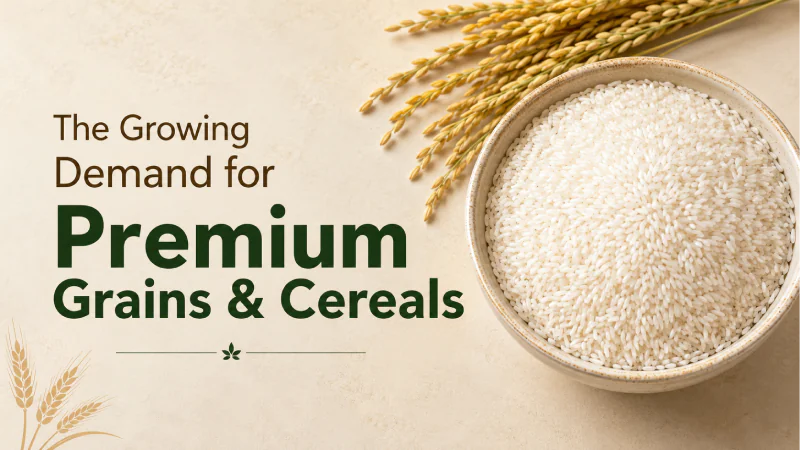
The Growing Demand for Premium Grains & Cereals
Key Takeaways
- The demand for premium grains and cereals is rising due to shifting diets and urban preferences for convenience.
- India's diverse agricultural practices make it a reliable Grains & Cereals Exporter in India for various grain varieties.
- Consistent quality and efficient documentation are crucial for successful partnerships in grain sourcing agreements.
- Porus Agri Export prioritizes clear communication and quality, ensuring reliable shipments for over twenty-five countries.
- Non-basmati rice is a major segment in global trade, emphasizing the need for careful sourcing and quality control.
Grains and cereals have been an essential part of human diets for thousands of years, providing energy, nutrition, and versatility across different cuisines worldwide. From rice and wheat-based foods to specialty grains used in modern healthy diets, premium-quality grains continue to experience increasing demand among consumers, food manufacturers, restaurants, and global distributors.
With growing awareness about nutrition, food quality, and sustainable agricultural products, buyers are looking for reliable suppliers who can provide consistent quality grains and cereals. India has become an important source for agricultural commodities due to its diverse farming practices, rich agricultural resources, and wide range of grain varieties.
Businesses worldwide prefer working with an experienced Grains & Cereals Exporter in India to access high-quality products suitable for retail, food processing, and commercial applications. Porus Agri Export supplies premium agricultural products while focusing on quality, reliability, and customer satisfaction for domestic and international markets.
Why Grain and Cereal Demand Keeps Rising
The increase in cereal trade cannot be attributed to population growth. Diets are changing, urban households are looking for packaged, ready-to-cook staples and food processing companies are seeking consistent raw material so that their production lines can be kept running without any downtime. Rice is still among the most traded foodstuffs in the world due to its suitability for daily diet in Asia, Middle East, Africa and some parts of Europe.
Purchasers are too. A broken shipment – grains with varying moisture content and/or packages – can cause an entire retail or wholesale cycle to be thrown off. This has forced importers to seek a Grains & Cereals Exporter in India who can provide them with the same quality shipment, not only once, but several times. This trend highlights India's role as a significant rice producer and the well-developed ports system, ensuring that the country remains a pivotal player in the global rice market.
Why India Remains a Preferred Sourcing Destination
Rice is grown in various agro-climatic zones in India, and the buyers also get diverse types of grain, its size, and the quality of their rice. States such as Gujarat are located near major ports, thereby reducing the distance between the processing unit and the vessel, and ensuring predictable transit times. This geographical benefit is one of the reasons international buyers continue to buy from a Grains & Cereals Exporter in India instead of the regions that are farther away.
It's not, of course, just about cost efficiency. Price is not the only factor buyers consider when purchasing; sourcing reliability, communication speed, and documentation accuracy are also taken into account. The quickest supplier to answer queries and ship on time will also tend to get repeat business even if there are lower rates elsewhere.
What Goes Into a Quality Grain Shipment
The production of export grade rice and cereals is a sequential process and failure of any of the steps is reflected in a customer complaint. What usually happens before a bag of rice gets into a bag:
Sourcing from farms: The grain is purchased from the areas where it is growing, and the harvesting process is overseen. By using direct sourcing, the product will pass fewer hands, helping to keep the product fresh and minimizing contamination.
Cleaning and sorting: The raw paddy or rice is mechanically sorted to remove foreign materials, dirt and stones. This action directly impacts on the quality of the look that customers evaluate a shipment by.
Grading by specification: Different markets ask for different broken percentages, grain lengths, and moisture levels. Matching the exact specifications a buyer requests is what separates a casual supplier from a serious one.
Packing for transit: Export packing must be able to endure weeks on the sea, temperature differences and the handling in various ports. One of the most frequent causes of damaged shipments is poor packaging.
Documentation and compliance: Phytosanitary certificates, quality certificates and shipping documents have to be identical with the actual cargo. Discrepancies can delay the release of goods at customs and result in a loss of time and money for the buyer.
A Grains & Cereals Exporter in India who takes care of the entire chain from sowing to harvest or with a well-coordinated group ensures that the buyer is not left with any surprises.
Non-Basmati Rice: A Growing Segment of the Trade
Although basmati rice is known for its aroma and expensive price tag, non-basmati rice makes up a much larger portion of rice consumed on a global scale. It is the main grain used by millions of households and is a major raw material in the parboiling industry, bulk food industry and packaging industry. Consistent size, correct texture and good cooking are increasingly becoming important to buyers for this type of grain, and buyers are seeking suppliers who specialize in this type.
The non-basmati is shipped in higher volumes and therefore even minor fluctuations in quality are amplified over a complete container load. This makes it imperative for sourcing discipline in this segment and is one of the key considerations for buyers to carefully assess a Grains & Cereals Exporter in India prior to entering into a long-term contract.
Porus Agri Export: Built Around Consistency
Porus Agri Export is based in Rajkot, Gujarat and ensures shipments are dispatched near the port of Mundra and Kandla for hassle free FOB services. This company is engaged in Grains & Cereals Exporter in India where the non-basmati rice is processed in sortex cleaning and graded to conform the buyer requirement of broken percentage and quality. This close collaboration between sourcing and shipping is what makes it possible for Porus Agri Export to be able to supply the markets of over twenty-five countries on a regular basis.
The simplicity of the approach at Porus Agri Export is to closely work with the farms, process it simply and under control, and at every stage of an order communicate clearly with the buyers. The team at Porus Agri Export is more concerned with establishing a relationship that will last for several seasons and multiple contracts, rather than a single transaction.
The Road Ahead for Grain and Cereal Trade
There are no signs that the demand for the rice and cereals will ease in the world. The population growth, changes in diets, and increases in food processing products indicate continued trade volume. Those who have established dependable sourcing agreements are in a stronger position for the future, not just for finding someone to supply the needed product at the last minute when demand booms or a harvest season is affected by weather.
Long-term supplier evaluation for companies can be effectively managed by working with a reputed supplier of Grains & Cereals Exporters in India. Quality, documentation, and predictable shipping dates make this process stressful to sourcing easy to manage and repeatable.
Why Choose Us
Porus Agri Export brings together direct farm sourcing, sortex-based cleaning, and specification-matched grading under one coordinated process, which means buyers deal with fewer intermediaries and fewer quality surprises. Shipments move out through Mundra and Kandla ports, keeping transit times predictable for the twenty-five-plus countries currently served. The team places equal weight on grain quality and clear communication, answering specification questions and documentation queries before an order is finalized rather than after a shipment has already sailed. For businesses that need a rice and cereal supply chain they can plan around season after season, this combination of hands-on processing and straightforward buyer support makes Porus Agri Export a practical partner rather than just another line item in a sourcing list.
Conclusion
Rice and cereal trade continue to grow as global diets shift, and food processing industries expand worldwide. Buyers increasingly prioritize consistency, documentation, and communication over price alone when choosing a supplier. India's rice-growing regions and strong port connectivity keep the country central to this trade. Porus Agri Export, based in Rajkot, Gujarat, supplies non-basmati rice processed through sortex grading and shipped from Mundra and Kandla to more than twenty-five countries. Companies looking for a steady, transparent sourcing partner will find that careful farm coordination and clear buyer communication make a measurable difference across every shipment cycle.
Looking for a dependable partner for rice and cereal supply from India? Porus Agri Export offers sortex-graded non-basmati rice with transparent documentation and steady FOB shipping from Gujarat's key ports. Call +91 98250 40085 or email info@porusagriexport.com
Frequently Asked Questions
What are the benefits of choosing a Grains & Cereals Exporter in India?
Choosing a Grains & Cereals Exporter in India offers several benefits, including access to diverse grain varieties, reliable sourcing, and consistent quality. India’s proximity to major shipping ports also ensures predictable transit times, which is critical for supply chain reliability.
How can I ensure quality when sourcing grains and cereals?
To ensure quality, it's essential to partner with a reputable Grains & Cereals Exporter in India that follows strict sourcing and processing standards. Look for exporters that provide detailed documentation and gather feedback from previous clients to assess their reliability.
Why is there an increasing demand for non-basmati rice?
The demand for non-basmati rice is rising due to its affordability and versatility as a staple food for millions globally. With food processors and households seeking consistent quality and size, suppliers are focusing more on this segment to meet market needs.
What factors should I consider when selecting a grains and cereals supplier?
When selecting a grains and cereals supplier, consider factors such as quality consistency, documentation accuracy, communication speed, and pricing. A supplier that demonstrates strong logistical capabilities and maintains good buyer relationships will often provide a more reliable service.
How does Porus Agri Export ensure quality in their grain shipments?
Porus Agri Export ensures quality through direct farm sourcing, sortex-based cleaning, and specification-matched grading. By overseeing each step of the process and maintaining clear communication with clients, they reduce the risk of quality surprises and streamline the supply chain.


+91 98250 40085
info@porusagriexport.com