

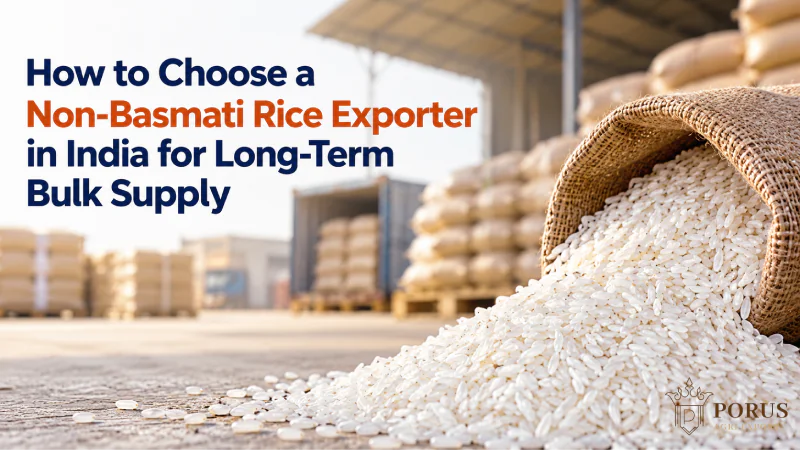
How to Choose a Non-Basmati Rice Exporter in India for Long-Term Bulk Supply
Key Takeaways
- Understand the importance of rice variety and specifications when choosing a non-basmati rice exporter in India.
- Evaluate quality control processes to ensure consistent rice quality throughout bulk supply orders.
- Confirm packaging options and shipment handling with your chosen Grains & Cereals Exporter in India.
- Verify export documentation and shipping support to facilitate smooth international transactions.
- Establish clear communication with your exporter for long-term reliability and consistent supply chain management.
Porus Agri Export is a leading exporter of non-basmati rice from India, offering quality-focused sourcing and bulk supply for international buyers. Finding a reliable Grains & Cereals Exporter in India is essential when your business depends on consistent rice quality, dependable shipments, and long-term availability. Whether you are an importer, wholesaler, distributor, or food manufacturer, choosing the right export partner can make a significant difference in your supply chain.
Why Choosing the Right Non-Basmati Rice Exporter Matters
Non-basmati rice is widely used in households, restaurants, catering businesses, and food processing industries. However, grain quality, moisture levels, and cooking performance can vary between suppliers.
For businesses purchasing rice in bulk, consistent quality across shipments is just as important as the initial product selection.
A reliable exporter should understand your requirements, maintain clear communication, and offer suitable packaging and shipping arrangements. At Porus Agri Export, we focus on building lasting business relationships through careful sourcing, quality control, and dependable export coordination.
1. Check Rice Varieties and Product Specifications
Different markets require different non-basmati rice varieties. Before selecting an exporter, confirm that the available products match your customers' preferences.
We offer non-basmati rice options including IR-64 and Sona Masoori, with selectable grain lengths, polishing, and broken rice percentages.
Important specifications to verify include:
- Rice variety: Select rice suitable for your target market.
- Broken Percentage: Confirm the required grade, such as 5%, 25%, or 100% broken rice.
- Moisture content: Review the acceptable moisture level for storage and shipping.
- Grain uniformity: Check consistency in size, colour, and appearance.
- Cooking quality: Evaluate texture and performance before placing regular orders.
Choosing a Grains & Cereals Exporter in India that offers clearly defined specifications makes repeat purchasing more manageable.
2. Evaluate Quality Control and Cleaning Standards
Rice quality directly affects customer satisfaction and product acceptance. Poorly cleaned rice, inconsistent grain sizes, or excessive moisture can create problems during storage and distribution.
Look for exporters who follow systematic cleaning, sorting, and grading processes.
At Porus Agri Export, our non-basmati rice offering includes Sortex-cleaned grains, specified broken percentages, and a stated maximum moisture content of 14%.
Requesting product samples and reviewing quality specifications before ordering can help buyers make informed purchasing decisions.
3. Verify Bulk Supply and Packaging Options
Long-term bulk purchasing requires more than selecting the right rice variety. Packaging, shipment quantities, and product handling also deserve attention.
An experienced Grains & Cereals Exporter in India should discuss packaging requirements before confirming an order.
For our non-basmati rice exports, we offer 25 kg and 50 kg packaging options, including PP bags. Customised and private-label packaging can also be discussed based on buyer requirements.
Before finalising your supplier, confirm the expected order volume, packaging specifications, and dispatch arrangements. Clear planning helps reduce confusion during repeat shipments.
4. Review Export Documentation and Shipping Support
International rice shipments involve multiple documents and coordination between suppliers, shipping partners, and importers.
We support bulk shipments through Mundra and Kandla ports in Gujarat, with shipping terms including FOB, CIF, and CFR.
Buyers should discuss the following documents before placing an order:
- Commercial Invoice and Packing List
- Bill of Lading
- Certificate of Origin
- Certificate of Analysis
- Phytosanitary and Fumigation Certificates, as applicable
Working with an exporter who communicates documentation requirements clearly can simplify shipment preparation and coordination.
5. Assess Communication and Long-Term Reliability
A dependable supply relationship depends on transparent communication, consistent specifications, and realistic delivery planning.
When evaluating a Grains & Cereals Exporter in India, consider how clearly the supplier responds to product inquiries, discusses order requirements, and coordinates shipments.
For long-term purchasing, we recommend confirming the agreed rice grade, packaging format, shipment schedule, and inspection requirements before each order.
A reliable export partnership should support your business beyond a single shipment.
Why Choose Us
At Porus Agri Export, we understand the importance of quality, consistency, and reliable communication for international rice buyers. We offer non-basmati rice with selectable grades, Sortex cleaning, and flexible packaging arrangements for bulk requirements. Our team coordinates sourcing, product specifications, documentation, and shipment planning to support importers, wholesalers, and distributors. With a focus on transparent business practices and long-term partnerships, we aim to make sourcing Indian non-basmati rice straightforward and dependable for our customers.
Conclusion
Choosing the right non-basmati rice exporter in India requires careful evaluation of rice varieties, product quality, packaging, documentation, and supply reliability. A suitable supplier should understand your business requirements and maintain clear communication throughout the purchasing process.
For importers and distributors, building a long-term relationship with a trusted Grains & Cereals Exporter in India can support consistent product sourcing and smoother shipment coordination.
At Porus Agri Export, we focus on supplying quality non-basmati rice while developing lasting relationships with international buyers. Our team is ready to discuss your bulk requirements and help you select suitable rice specifications for your market.
Looking for a reliable non-basmati rice exporter in India for long-term bulk supply?
Partner with us for quality-focused sourcing, flexible packaging, and dependable export support.
Contact our export team today to discuss your bulk rice requirements and request product details or samples.
Call : +91 98250 40085
Email: info@porusagriexport.com
Frequently Asked Questions
What should I consider when choosing a non-basmati rice exporter in India?
When selecting a non-basmati rice exporter in India, consider rice varieties, quality control, packaging options, export documentation, and their reliability in communication. Ensure the exporter can meet your specific requirements for bulk supply and maintain consistent quality.
How do rice quality standards affect bulk rice supply?
Rice quality standards directly impact customer satisfaction and market acceptance. Ensuring your exporter adheres to strict quality control measures, including moisture content and cleaning processes, is crucial for maintaining consistent product quality in bulk supply.
What types of non-basmati rice are available for export from India?
Different types of non-basmati rice, such as IR-64 and Sona Masoori, are available for export. It's important to confirm the specific varieties that align with your customers' preferences and market demands.
How can I ensure reliable shipping support from an Indian rice exporter?
To ensure reliable shipping support, discuss the expected order volume, packaging, and documentation needed with your Indian rice exporter. A good exporter will provide clear shipping terms and assist with all necessary export documentation.
What are the key factors for establishing a long-term partnership with a grains & cereals exporter in India?
Key factors for a long-term partnership include transparent communication, consistent product specifications, and realistic delivery planning. Building a relationship with a reliable grains & cereals exporter in India will help streamline your sourcing process and enhance supply chain reliability.

Recent Posts
+91 98250 40085
info@porusagriexport.com