

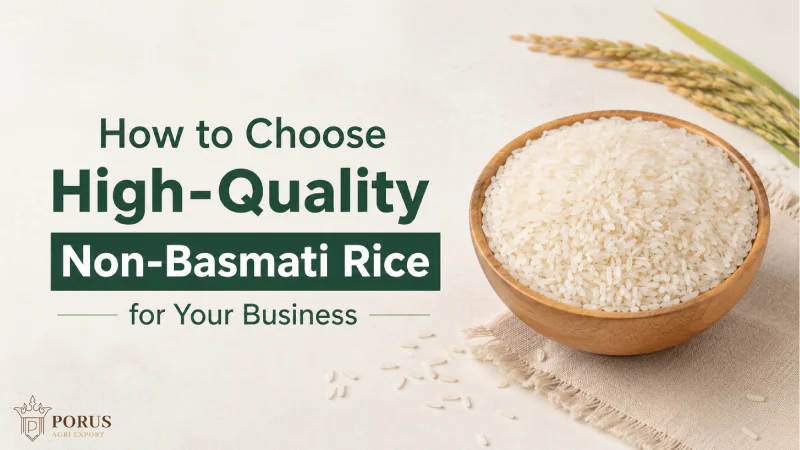
How to Choose High-Quality Non-Basmati Rice for Your Business
Key Takeaways
- 1. Quality Is the Foundation of Premium Non-Basmati Rice Key factors such as grain size, purity, moisture content, cooking performance, and freshness directly impact customer satisfaction and business success.
- 2. India Is a Preferred Source for Non-Basmati Rice India offers diverse rice varieties, competitive pricing, advanced processing facilities, and strong export capabilities, making it a leading supplier in global markets.
- 3. Proper Packaging and Storage Protect Rice Quality Food-grade packaging, moisture control, and secure transportation methods are essential to preserve freshness, extend shelf life, and prevent contamination.
- 4. Choosing the Right Supplier Reduces Business Risks Working with an experienced Non-Basmati Rice Exporter in India ensures consistent quality, reliable logistics, export compliance, and uninterrupted supply chains.
- 5. Avoid Common Buying Mistakes for Long-Term Success Businesses should avoid ignoring quality checks, prioritizing low price over quality, overlooking packaging standards, and partnering with inexperienced suppliers to maintain product quality and customer trust.
The global rice industry continues to grow as food businesses, wholesalers, retailers, hotels, and distributors search for dependable rice suppliers. Non-basmati rice has become one of the most demanded rice categories because of its affordability, versatility, nutritional value, and wide culinary applications. Businesses involved in food production and international trade understand the importance of selecting premium-quality rice that matches customer expectations and market standards.
Finding the right supplier is one of the most important decisions for any rice-based business. A trusted Non-Basmati Rice Exporter in India can help companies maintain consistent product quality, smooth logistics, and long-term business success. Choosing the right rice requires careful evaluation of grain quality, texture, aroma, processing standards, packaging, and supplier reliability.
Porus Agri Export has earned recognition in the international market for delivering premium rice products to global buyers. As a reliable partner in the agricultural export industry, Porus Agri Export focuses on maintaining quality standards and delivering rice products suitable for multiple industries and cuisines.
Understanding Non-Basmati Rice
Non-basmati rice refers to rice varieties that are not classified as basmati. These varieties are widely consumed across the world because they are economical, nutritious, and suitable for different cooking applications. Non-basmati rice includes several grain types such as long-grain rice, medium-grain rice, and short-grain rice.
Businesses choose non-basmati rice for restaurants, catering services, food manufacturing units, supermarkets, and export distribution because of its versatility and large-scale availability. India is among the largest producers and exporters of non-basmati rice, making the country a preferred sourcing destination for international buyers.
A professional Non-Basmati Rice Exporter in India understands the specific needs of global buyers and supplies rice varieties according to industry requirements and regional preferences.
Why Quality Matters in Non-Basmati Rice
The quality of rice directly affects customer satisfaction, brand reputation, and repeat purchases. Poor-quality rice can result in broken grains, uneven cooking, unpleasant odor, and reduced shelf life. Businesses dealing with food products must maintain consistency to retain customer trust.
High-quality non-basmati rice provides:
- Better texture after cooking
- Uniform grain size
- Improved shelf life
- Clean appearance
- Higher nutritional value
- Better customer acceptance
When sourcing rice from a dependable Non-Basmati Rice Exporter in India, businesses can maintain consistent quality across every shipment.
Key Factors to Consider When Choosing Non-Basmati Rice
1. Grain Size and Appearance
The appearance of rice is one of the first indicators of quality. High-grade non-basmati rice should have uniform grain size, minimal broken grains, and a clean surface. Buyers should inspect the rice carefully for discoloration, damaged grains, or foreign particles.
Long and evenly polished grains are usually preferred in international markets because they create a visually appealing final product. A professional supplier like Porus Agri Export follows strict processing methods to maintain grain consistency and cleanliness.
2. Moisture Content
Moisture content plays an important role in determining the shelf life and storage quality of rice. Excess moisture can lead to fungal growth, spoilage, and unpleasant odor. Rice with balanced moisture content stays fresh for longer periods and maintains its texture during transportation.
Reliable exporters conduct moisture testing before shipment to maintain product safety and quality standards.
3. Purity and Cleanliness
High-quality rice should be free from dust, stones, husk particles, insects, and contaminants. Businesses importing rice in bulk must work with suppliers that use advanced cleaning and sorting technologies.
A reputed Non-Basmati Rice Exporter in India uses quality control systems to deliver pure and hygienic rice products suitable for food-grade applications.
4. Cooking Performance
Cooking quality is one of the most important aspects for restaurants, food manufacturers, and catering businesses. Premium non-basmati rice should cook evenly without becoming sticky or mushy unless the variety specifically requires it.
Businesses should evaluate:
- Grain elongation after cooking
- Texture consistency
- Water absorption capacity
- Taste and softness
Porus Agri Export supplies rice varieties that meet international cooking preferences and commercial food requirements.
5. Aroma and Freshness
While non-basmati rice does not have the same fragrance profile as basmati rice, fresh rice should still have a natural and clean aroma. Unpleasant smells may indicate poor storage conditions or aging issues.
Freshly processed rice from a trusted Non-Basmati Rice Exporter in India maintains natural freshness and quality throughout transportation and storage.
Importance of Sourcing from India
India is one of the largest agricultural producers in the world and a major supplier of non-basmati rice to global markets. Indian rice exporters are known for large-scale production capacity, competitive pricing, and a wide range of rice varieties.
Advantages of sourcing from India include:
- Availability of multiple rice varieties
- Competitive export pricing
- Strong agricultural infrastructure
- Modern processing facilities
- Global export expertise
- Compliance with international standards
Porus Agri Export supplies high-quality rice products to multiple countries while maintaining strict quality and packaging standards.
Packaging Standards for Bulk Rice Supply
Packaging is another important factor when selecting rice for business purposes. Proper packaging protects rice from moisture, contamination, and transportation damage.
Businesses should choose exporters that offer:
- Durable packaging materials
- Food-grade packaging standards
- Customized packaging options
- Proper labeling and documentation
- Export-safe containers
An experienced Non-Basmati Rice Exporter in India understands the packaging requirements of international buyers and delivers products in secure export-ready packaging.
Different Uses of Non-Basmati Rice in Business
Non-basmati rice is used across various industries because of its flexibility and affordability. Businesses across the food sector prefer it for large-scale consumption.
Restaurants and Hotels
Restaurants require rice with consistent cooking quality and texture. Non-basmati rice works well for daily meals, buffet services, and regional cuisines.
Food Manufacturing Industry
Processed food manufacturers use non-basmati rice for ready-to-eat meals, rice flour, snacks, cereals, and packaged food products.
Supermarkets and Retail Stores
Retailers look for premium packaging and consistent quality to attract customers and increase repeat purchases.
Export and Distribution
Global distributors source rice from trusted exporters for supply to international food markets.
A reliable Non-Basmati Rice Exporter in India helps businesses across all these sectors maintain uninterrupted supply chains.
Common Mistakes Businesses Should Avoid
Ignoring Quality Testing
Purchasing rice without quality inspection can lead to inconsistent supply and customer dissatisfaction.
Choosing Price Over Quality
Low-cost rice may compromise grain quality, hygiene, and cooking performance. Businesses should focus on long-term value rather than pricing.
Overlooking Packaging Standards
Improper packaging can damage rice during transit and reduce shelf life.
Working with Inexperienced Suppliers
An inexperienced supplier may struggle with export compliance, logistics management, and consistent quality delivery.
Partnering with a dependable Non-Basmati Rice Exporter in India reduces these risks and improves business stability.
Why Choose Us
Porus Agri Export has established itself as a trusted name in the agricultural export industry by delivering premium-quality rice products to global markets. The company focuses on maintaining strict quality standards, advanced processing methods, hygienic packaging, and timely delivery solutions for international buyers. Porus Agri Export understands the diverse needs of food businesses, distributors, wholesalers, and retailers, making it easier for clients to source high-quality non-basmati rice with confidence. With a commitment to professionalism, transparency, and customer satisfaction, Porus Agri Export continues to build long-term business relationships across multiple countries while offering reliable export support and consistent product quality.
Conclusion
Choosing high-quality non-basmati rice for your business requires careful attention to grain quality, moisture content, packaging, cooking performance, and supplier reliability. Businesses that invest in premium-quality rice products can improve customer satisfaction, strengthen brand reputation, and maintain consistent market demand. Working with an experienced supplier like Porus Agri Export provides access to professionally processed rice products suitable for international trade and commercial food industries. A trusted Non-Basmati Rice Exporter in India can help businesses manage supply chain requirements efficiently while delivering quality-focused rice solutions that support long-term business growth and customer trust across competitive global markets.
For premium-quality non-basmati rice solutions and export guidance, contact Porus Agri Export today at +91 98250 40085 or email info@porusagriexport.com
Frequently Asked Questions
What is non-basmati rice?
Non-basmati rice includes rice varieties that are not classified as basmati. These varieties are widely used for daily consumption, commercial food production, and export purposes.
Why is India a preferred source for non-basmati rice?
India is known for large-scale rice production, advanced processing infrastructure, competitive pricing, and reliable export capabilities.
How can businesses identify high-quality non-basmati rice?
Businesses should check grain uniformity, moisture content, cleanliness, cooking quality, aroma, and packaging standards before purchasing.
Why should businesses work with a trusted exporter?
An experienced exporter provides consistent quality, proper documentation, safe packaging, and timely international deliveries.
Why choose Porus Agri Export for non-basmati rice?
Porus Agri Export offers premium-quality rice products, professional export support, hygienic packaging, and reliable supply solutions for global buyers.

Recent Posts

porus0 Comments
Everything You Need to Know About Premium Coffee Beans

porus0 Comments
Key Factors That Define Premium Arabica Coffee Quality

porus0 Comments
Understanding Robusta Coffee: Benefits, Taste, and Market Value
+91 98250 40085
info@porusagriexport.com